
By Brian Thalhammer
Sponsored Content
Ask any seasoned restorer what truly brings a wooden boat back to life, and the answer goes beyond varnish lines and polished chrome. It lies beneath the floorboards, where cast iron, brass and impressive engineering await a second chance. As beautiful as a wooden hull may be, it’s the engine that gives it purpose. Without it, a boat can be admired. With it, it can move—and movement is what these vessels were built for.
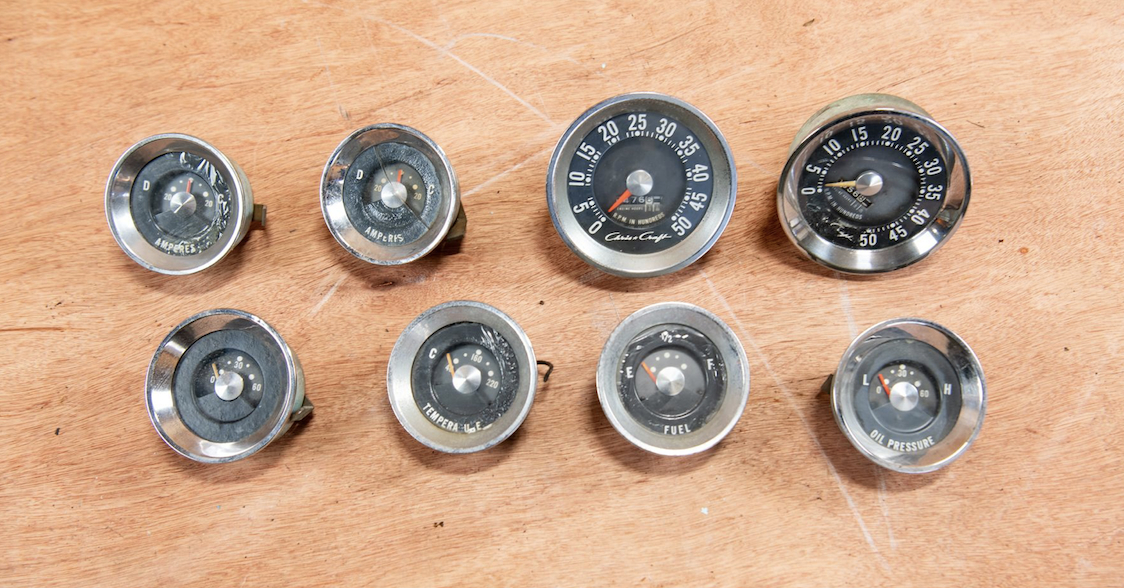
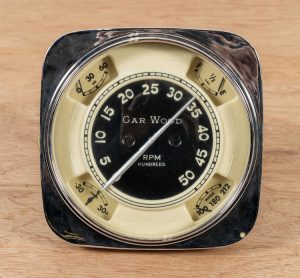 Mecum On Time® turns its attention to that vintage mechanical heartbeat within The American Wooden Boat Restoration Collection: Engines, Outboards & Parts—an open invitation to bid on entire boats, engines, parts and more from May 8 through June 11-13 via Mecum’s online-exclusive auction platform.
Clever Alterations
Before marine engines were purpose-built, they were often adapted—borrowed and modified from automotive counterparts. Early builders weren’t short on ingenuity; if a motor ran on land, chances were it would be tried on water. Over time, these conversions evolved into dedicated marine powerplants engineered to handle corrosion, manage raw-water cooling and deliver steady torque at lower RPMs. Companies like Kermath, Gray Marine and Chris-Craft helped define those early efforts.
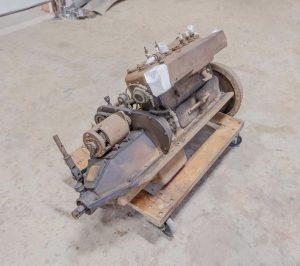 The American Wooden Boat Restoration Collection’s Kermath 20 HP 4-cylinder flathead represents that formative period well. Kermath engines were known for their simplicity and durability, qualities that made them popular among many early pleasure-craft owners. Often found in models like the Sea-Cub, Sea-Dog and early “Model 20,” this 4-cylinder engine powered small- to medium-sized pleasure craft and fishing boats from the 1920s through the 1940s.
Similarly, the Gray Marine Model Four-40 reflects the industry’s approach to compact, serviceable power. Gray Marine, founded in Detroit, became one of the earliest suppliers of marine engines derived from automotive platforms, often adapting Continental and other industrial blocks. These engines powered everything from small runabouts to utility craft and were prized for their rugged dependability.
The Inline-6 and Early Refinement
As boating evolved through the 1930s and postwar years, inline-6 configurations became a mainstay. Smooth, balanced and relatively easy to maintain, they offered a reliable step forward in both performance and refinement.
The Chris-Craft KL Flathead Inline-6 and the Century Gray Marine 135 are representative of that evolution. These engines were often factory-installed in midcentury wooden boats, designed to pair seamlessly with the hulls they powered. Today, they remain foundational pieces for anyone striving to accomplish period-correct restorations.
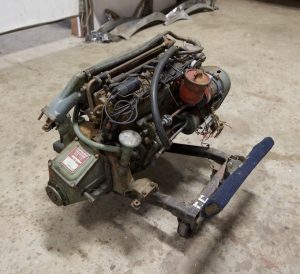 More specialized examples, like the Gray Marine Phantom Six-112—with its dual carburetors and more performance-oriented composition—show how manufacturers pushed beyond reliability into greater output and responsiveness.
Power Expands
By the 1950s and ’60s, horsepower became a leader of the conversation. Builders and engine manufacturers responded with larger displacement V-configurations, bringing increased speed and capability to recreational boating.
The Chrysler Marine Hemi V-8 stands out as a particularly compelling example. Derived from Chrysler’s legendary Hemi architecture, these engines were adapted for marine use with dual carburetors and robust internal components. This example is an ideal rebuild candidate that speaks to a generation that thrived when automotive performance engineering began finding its way onto the water.
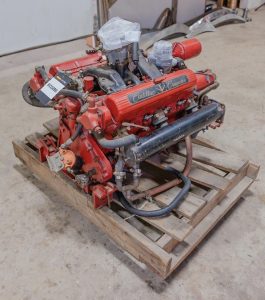
Likewise, the Cadillac Crusader MK-XVI V-8 emphasizes the lasting trend of marinizing automotive engines. Crusader, known for adapting Cadillac and other automotive blocks, produced engines that combined elegance with the potency often found in larger cruisers and higher-end runabouts.
 The Chris-Craft 427 CI Ford-based V-8 marks another leap forward. Capable of producing approximately 300 HP and equipped with a reduction drive, engines like this were built for serious performance applications. Ideal for devoted acceleration aficionados who prefer slicing through waves at high speeds rather than chugging along tranquil harbors in search of respite, this 427 offering bridges the gap between recreational boating and high-output marine engineering.
Modern Influence
As marine engine design progressed into the latter half of the 20th century, reliability, efficiency and integration became focal points. Engines were no longer just adapted—they were engineered with marine use in mind from the outset.
The Ford 351 Windsor Marine Interceptor symbolizes that progression. Likely dating to the late 1980s, based on the Motorcraft carburetor tag (E9JL-DA), this Ford Corporate Blue example features a Holley carburetor and Borg-Warner Velvet Drive transmission, reflecting a more modern, comprehensive drivetrain. Previously removed from a Correct Craft, the engine appears freshly rebuilt and presents well, making it an excellent prospect for a classic restoration without surrendering practicality.
Similarly, the Chris-Craft 350 CI Model G15 illustrates the continued evolution of factory-backed marine engines, integrating components like alternators and forward flywheels into more cohesive systems.
The Obscure and Unexpected
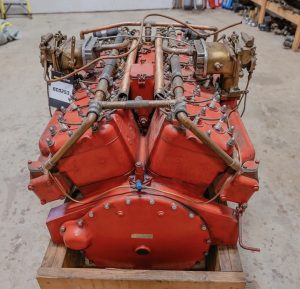 No collection of this depth would be complete without a few outliers, and this offering delivers. The Scripps Model 302 V-12 is among the most intriguing. With dual carburetors and dual ignition, it represents a level of complexity and ambition rarely seen. Scripps engines were known for their use in high-performance and racing applications, making surviving examples especially desirable.
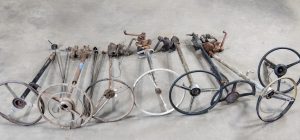
Smaller offerings, such as a trio of vintage outboard motors, prove that innovation wasn’t limited to inboards. Countless manufacturers produced compact, accessible engines that helped bring boating to a broader audience. Beyond engines, this auction includes components from Edelbrock, Holley, Rochester, Zenith and others, exhaust manifolds, and service manuals loaded with period-correct data—elements that are ready to facilitate the restoration of these or any other vintage marine powerplants.
An Ignition Key
Engines like the ones found in The American Wooden Boat Restoration Collection are becoming increasingly lost to time, parted out, or replaced with alternatives and abandoned. Finding the right engine, or even a viable vintage core, is becoming difficult, making this presentation a rare chance to complete a restoration or experience the satisfaction of hearing an iconic machine run again, in exactly the way it was born to.
 Seafarers know: It’s one thing to admire a wooden boat at rest; it’s another to bring it back under power and understand the effort it took to get it there.