
When an autonomous Navy boat rescued two downed Army helicopter pilots in the Straits of Hormuz in June 2026, it was interesting to note the technologies enabling the rescue directly trace back to classic boats.
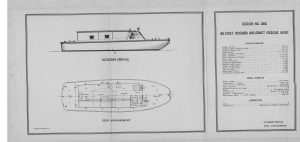
Design 382, a 36-foot WWII Aircraft Rescue Boat. Courtesy the U.S. Army Transportation Museum.
The boat, nicknamed the Corsair, is fully autonomous, 24-feet, with a maximum speed of 35 knots, that can travel 1,000 nautical miles and carry up to 1,000 pounds of equipment. “What’s interesting about this boat,” says Sepp Scanlin, director of the U.S. Army Transportation Museum in Fort Eustis, VA, “is the technology is really a melding of two technologies from the classic boat world: the aircraft (or crash) rescue boats of World War II, which were manned watercraft, and the remote-controlled target boats used for practicing both aerial and naval gunnery conceived and developed by Gar Wood.”
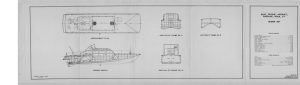
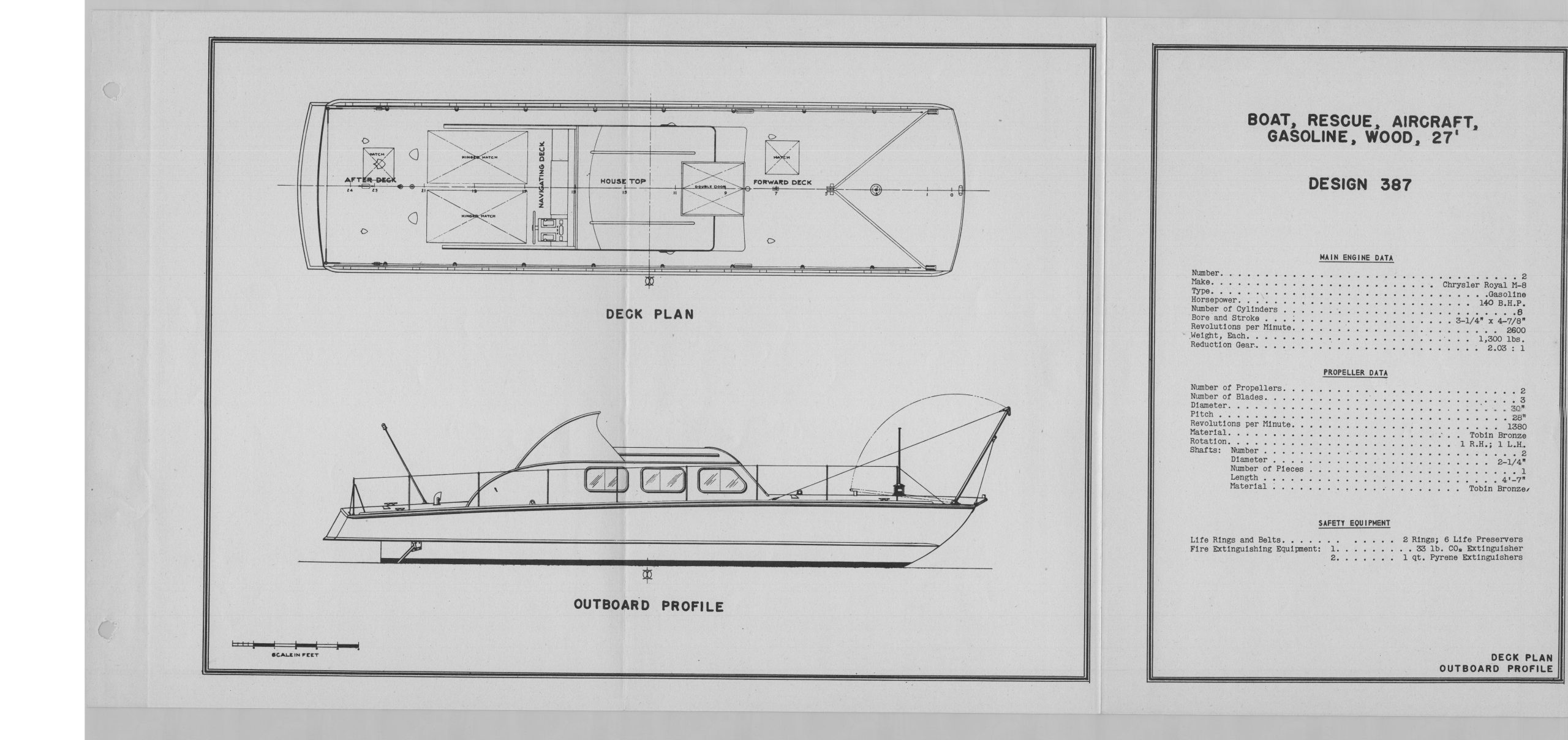
Design 387, a WWII 27-foot Aircraft Rescue Boat. Courtesy the U.S. Army Transportation Museum.
Crash rescue boats of the WWII-era went out and picked up sailors and airmen in the same circumstances as the June 2026 rescue. While there were various types and lengths of these boats, some as small as 12-feet, the length of several were in line with this modern crash rescue boat.
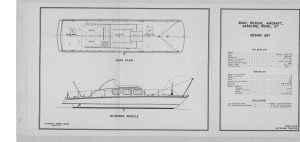
Design 387, a 27-foot WWII Aircraft Rescue Boat. Courtesy the U.S. Army Transportation Museum.
Numerous manufacturers made WWII aircraft rescue boats, with common plans approved by the military services that would use them. “For instance, plans for the Air Force and for Army crash boats would have been approved by the US Army Transportation Corps, and the Navy had its own.” Sepp says some designs were also exchanged between services. Slight variations might have been acceptable provided the boats met the primary aspects of the design and could meet the standard against which they would be inspected.
Design 382, a 36-foot WWII Aircraft Rescue Boat. Courtesy the U.S. Army Transportation Museum.
Numbers identified the boat designs. For instance, Albert Hickman in Boston, MA built 30 of Design 387, a 27-foot “Boat Rescue Shallow draft.”
Four manufacturers built Design 382, a 36-foot “Boat, Aircraft Rescue” as called in the design documents but listed in Army records as “Boat Passenger, Shallow draft.” Morton Johnson Co in Bayhead, NJ built six of Design 382; Johnson Bros. Boat Works in Point Pleasant, NJ also built six. Wilson Co in Wilmington, CA built 28 Design 382 boats, while Manteo Boatbuilding in Manteo, NC built five.
The Chris-Craft Corporation built 60 Design 326, a 22-foot “Boat Rescue Shallow.”
“By combining these aircraft or “crash” rescue boats with remote-controlled target boats, you can trace the lineage of today’s modern record-setting, autonomous craft to those two classic boats from the Second World War.”
For more information on the Gar Wood designed Remote Controlled Target Boat, see the story WWII Radio Controlled Target Boats.