
By Don Leutz, Northern California/Lake Tahoe Chapter
One of the most important safety items that antique and classic boaters should carry on board with them is a communication device in case of emergency. Most people today have a cell phone. In fact, in any given boat, there may be several cell phones available. Cell phones are especially convenient for conversations with other people on land and to make dining reservations, etc., but the Coast Guard and other search-and-rescue agencies cannot necessarily determine your location from an emergency cell phone call. Cell phone coverage is limited strictly by the locations of Cell Towers on land, so service may be marginal on the water.
 The most effective communications device, and the first choice for emergency calls, especially for lake and Delta boaters is the VHF (Very High Frequency) Radio. VHF emergency channels are constantly monitored by the U.S. Coast Guard. Boat to boat transmissions are generally limited to 20 nautical miles and may be shorter between powerboats with low antenna heights. Ship to shore calls may be possible up to 30 nautical miles due to the greater height of shore-based antennas.
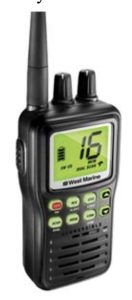
VHF Radios are available in both, fixed, or handheld models. Usually, a classic boater does not want to attach a VHF base radio, (which offers up to 25 watts of power), to an antique boat. A hand-held VHF Radio is preferred and easy to carry. The downside to hand-held VHF Radios is that battery capacity limits the radio to 5 or 6 watts of power, thus offering shorter communication range of 3 to 5 miles. All VHF Radios have must have a 1-watt power setting for short range communications to minimize stepping on, or interfering with other users. All VHF Radios made since 1987 switch automatically to the 1-watt setting when transmitting on Channels 13, 17, 67 and 77. A manual override to maximum power for emergency bridge-to-bridge communications is available on Channel 13, a channel that is reserved exclusively for communications with commercial vessels. For Delta boaters, when crossing paths with commercial ships, you are well advised to contact the ship via Channel 13. Describe your vessel, your location relative to the ship and what you are planning to do. Remember, a large ship cannot see a small boat that might be in front of it.
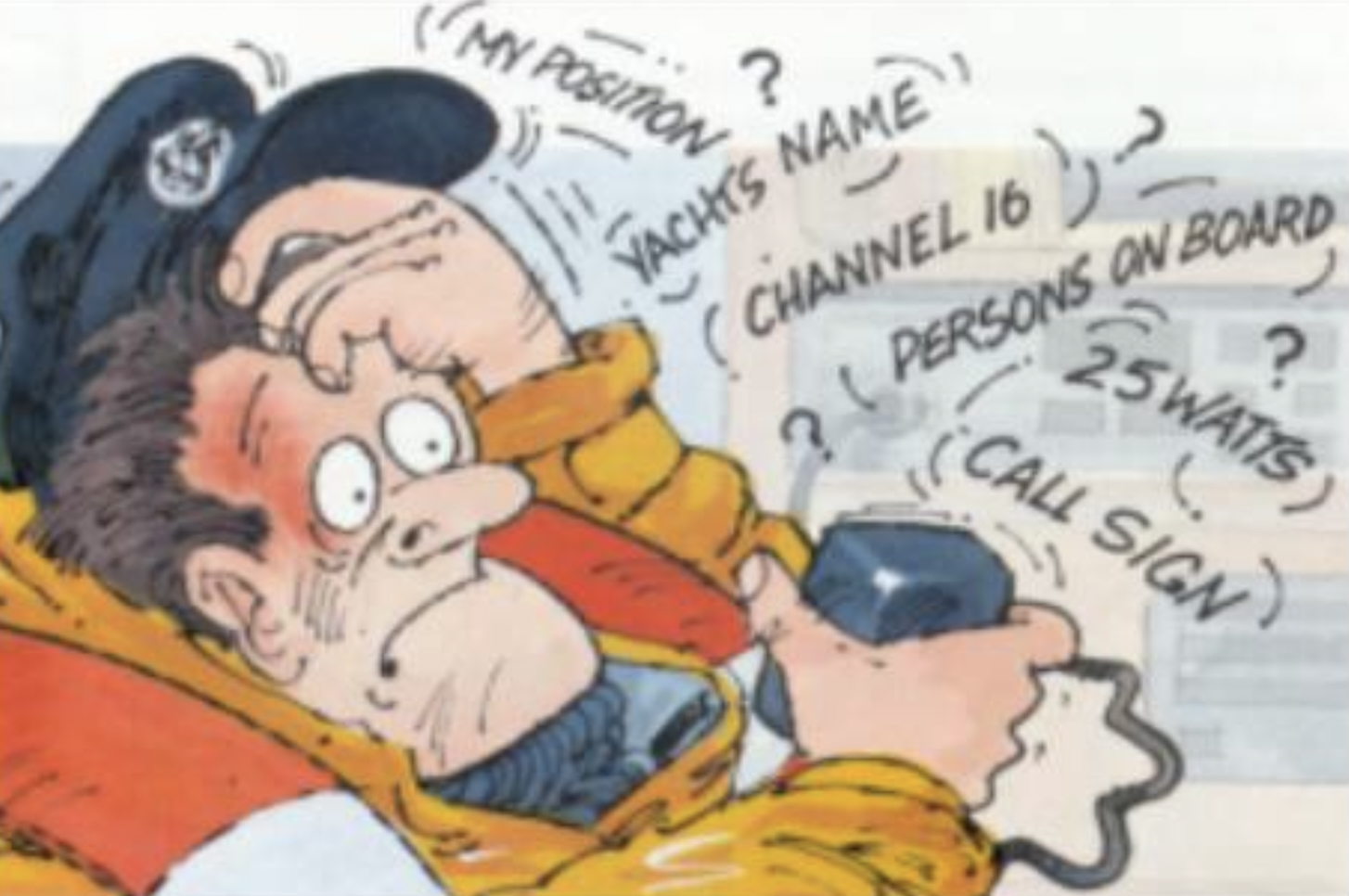
Recreational boats and hired vessels with no more than six passengers are considered “voluntary vessels” and are not required to carry a VHF Radio or to maintain a radio operator’s license (as long as you do not visit a foreign port). However, if you do carry a VHF Radio, you are required to monitor
Channel 16 at all times. Channel 16 is the International Distress frequency and is also used for safety messages and calling another boater or shore station. Many VHF Radios have a scanning feature which allows one to scan more than one channel at a time.
 Channel 9 is also a good channel to monitor, as it is the Alternate Calling Channel. Not every channel on the VHF Radio Band is available to us as antique and classic boaters. Many channels are designated for use by commercial vessels only and should not be used by recreational boaters. Working channels for recreational boaters are generally Channels, 68, 69, 71, 72, 78A.
When attempting to contact another boater, begin by trying to hail the other vessel on Chanel 16 (Channel 9 is the Alternate Calling Channel). Use the following method after listening to be sure the radio channel is clear of traffic: “This is Boat A (name of boat) calling Boat B (name of boat)” (say up to three times). If no answer, repeat in two minutes if the radio traffic is clear. If still no answer, try again in fifteen minutes.
If, or when, you get an answer, listen for Boat B calling Boat A. Your caller should direct you to a working channel such as “six-eight” (not sixty-eight). If you receive the direction to channel 68, say “Over” and switch your radio to Channel 68 within one minute and say: “Boat A (name of boat) calling Boat B (name of boat).” Then, provide your short message and say: “Over”.
To end, after the last message, either party says: “(boat name), out”.
Should you find you and your boat in an emergency, there are three types of calls: DISTRESS, URGENCY, and SAFETY. These calls are transmitted on Channel 16 and vary slightly.
This story was first printed in the Winter 2016 issue of the Northern California/Lake Tahoe Chapter newsletter, Western Wood.