
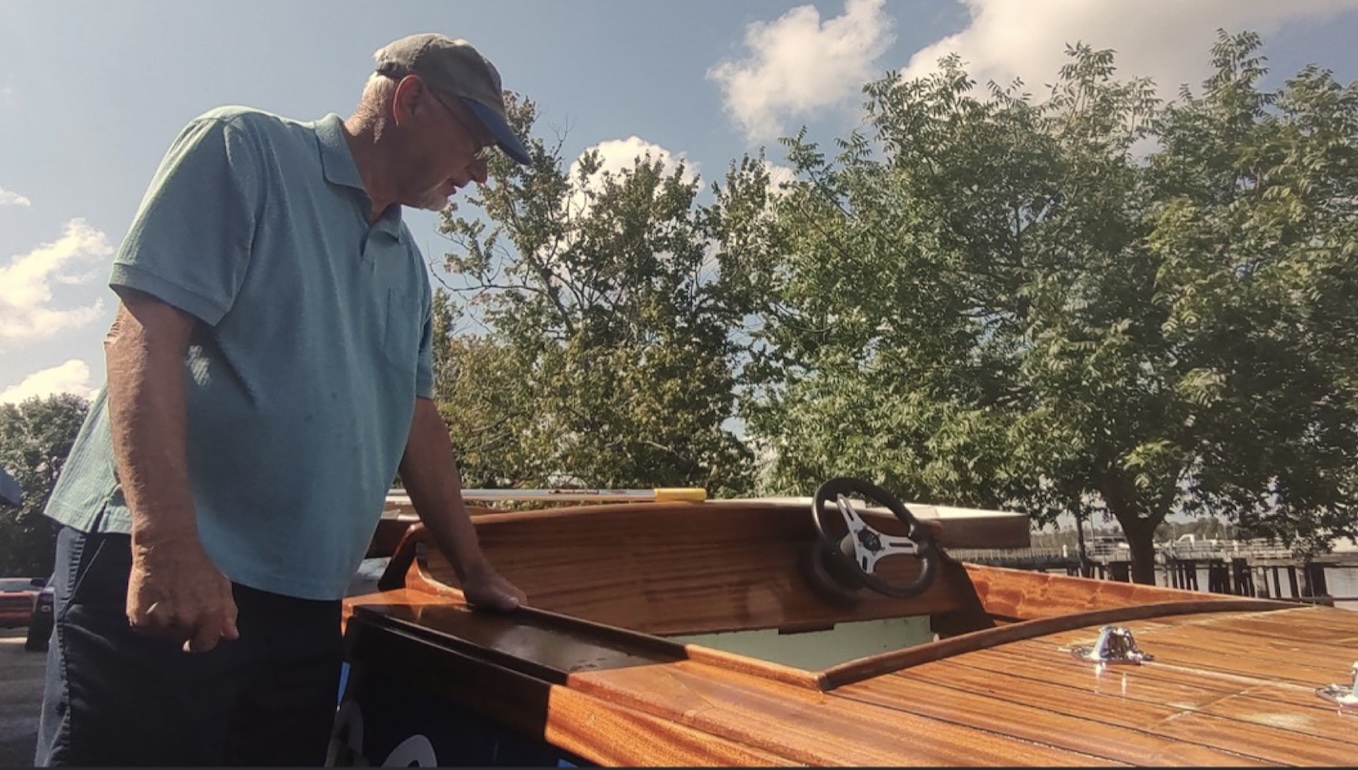
By Alan Hills, North Carolina Coastal & Piedmont Chapter
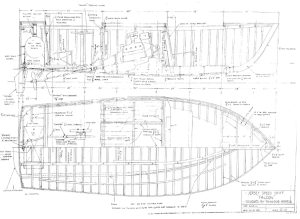
Here are the plans for the boat, the blueprint by which I would outfit the hull that I purchased from the CFCC boat building program. Yes, I said “hull.” They will not sell a boat with an engine, so that’s all I got.
It all started at the 2022 Cape Fear Community College boat show. The unmistakable profile immediately told me that I was looking at a Jersey Speed Skiff being built in the college shop. I’ve had an affinity for these going back to taking the family up to Stuart, Florida, to watch them race. A young lady, who was part of the build team, was proudly sitting in the boat answering questions from the show visitors. I asked her about the design and construction and she said it was built from a 1950s design, but the build was of modern glued lapstrake as opposed traditional planking and rib. I thought it was very cool that they were building this, a race boat, along with the sailing and motor skiffs that are more the norm of the program.
Fast forward to our 2024 International Vintage Boating Day gathering at the Wilmington Marine Center. Our chapter was displaying a group of boats there, one of them owned by John Olsen, who is member and also the director of boat manufacture and service at the community college. In a conversation with him, he mentioned that the Speed Skiff had been sitting outside for a while and that he’d really like to find someone to buy it. John told me that it was showing the signs of improper storage, and that they were not allowed to sell boats with trailers or engines. So, it was basically a bare hull. I told him I might be interested and would get back with him about it. On the way home, I told Mrs. Hills that I really wanted to buy the skiff and make it a usable boat. I told her that the real hook for me was the fact that it had been featured in the summer 2024 issue of The Rudder, and I thought that would make a perfect backstory to tell at boat shows. Well, she bought into that logic and we purchased the boat.
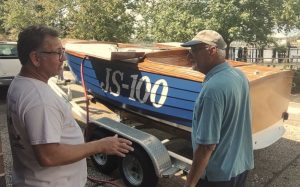
At that time, I had a 15’ Cavalier in the shop so Jim Hartman let me stick JS100 under a shelter at his place. Eventually, I was able to move the Cavalier into my carport and brought the skiff home. I started to list all I could think of that would be needed make this a running boat. First thing on the list was an engine. Member John Justice has all kinds of engines in his shop (The Piglet) so he was the first person I reached out to. He told me of an old PCM 351 ski boat engine that he had given to Robert Blanchard to install in his vintage Ford Bronco a few years prior that ended up not getting used. I called Robert and he said to come and get it. It was missing a few parts but it was something I could deal with. I had my engine! Now all I needed was the running gear, a set of gauges, some deck hardware, refinish the weathered sapele deck, and I’d be all set. This should be pretty easy, I thought. But in the immortal words of the late coach Lee Corso that he uttered almost every week on ESPN’s College Gameday, “Not so fast, my friend!”
Alan Hills’ restoration story will continue in Part II, stay tuned.
Great article, Alan! Can’t wait to read part 2.
This is a great story love it. The narrative makes you feel involved. Thst is like like my book “untold Stories” Thrill Triumphant and Tragedy. It is 12 chapters of chapters history each chapter stand alone but weaves through vintage racing building and restoration of boats. Meet the racers, read their stories. What an interesting era and happy to see the comeback.
They are fun little boats! I have had a number of them, and own one of the oldest surviving original cedar planked speed skiffs. (Have had her for 50 years.)